
Notes from the third week of every pilot.
What we're learning, deploying, and arguing about across every plant currently running PredCo. Compliance, reliability, vision, and the bits of industrial AI that actually matter once the demo ends.
What we're reading on the line this week.
 7failure modes mapped
What survives the third week of an industrial AI pilot.
A pattern is clear across our deployments: PoCs that look great on day one and disintegrate on day twenty share the same failure modes. We've mapped seven of them, and what to do instead.
Read the field note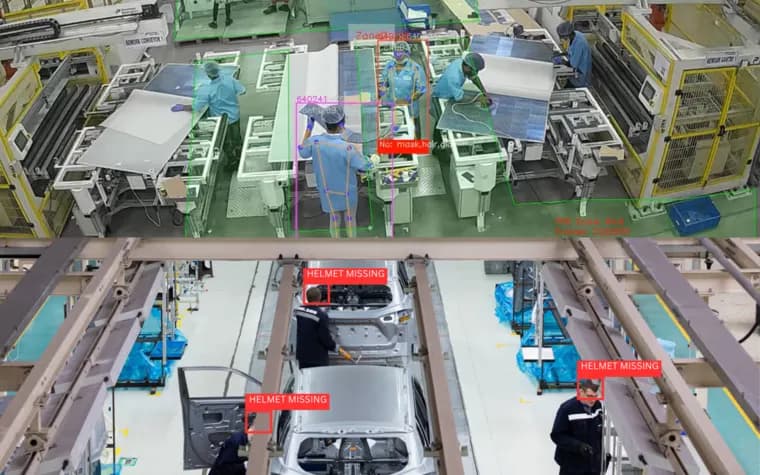 2-4existing cameras for a first site
AI on construction site CCTV: what the cameras already there can see.
Most live sites already have cameras from the security contractor. What they can detect today (helmets, harness zones, trucks among people, blocked egress), what they cannot, and how to run a first site in six weeks.
 3clauses that disqualify most bids
Winning more infrastructure tenders without a bigger bid team.
Where an EPC bid team's week really goes, how tender automation reads every notice, checks eligibility and drafts the compliance matrix, and the three clauses that disqualify most often.
 1 pourlost per unplanned batching-plant stop
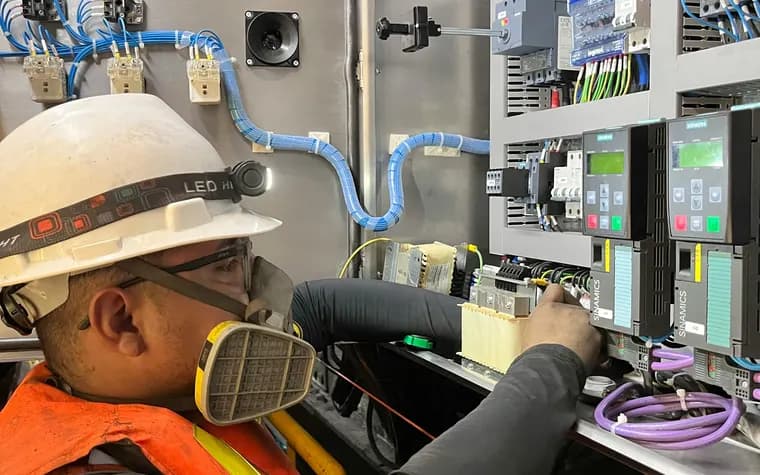
Batching plants, crushers and DG sets: the equipment that holds a schedule hostage.
Why construction equipment fails without warning, which signatures predict a mixer gearbox or a crusher bearing weeks out, and how to start monitoring with the sensors a plant already has.
6stages from discovery to submissionTender response automation: read everything, bid on the right ones.
Where a bid team's week really goes, what an automated tender lifecycle looks like from discovery to compliance check, and what to look for when choosing a system.
 4things extracted from every drawing
P&ID digitization: turning legacy drawings into searchable plant data.
What digitization extracts from P&IDs, SLDs and GA drawings, how to judge accuracy on your own scans, and where to start so the data gets used.
 0new cameras required
AI on your existing CCTV: what it can and cannot see in an Indian plant.
Most plants already have the cameras. Whether AI video analytics works on them depends on angle, distance, light and the network, not the camera brand. A plain guide for plant and EHS heads.
6PPE classes on one camera feedPPE detection on existing CCTV: a plant head's guide.
What AI PPE detection checks, where it works well, where it struggles, and how to roll it out zone by zone without drowning supervisors in alerts.
5stages before autonomyStart with the plant, not the robot.
Physical AI enquiries almost always open with the machine. The plants that get it working start a layer below, with perception and a grounded record of what the machine is looking at.
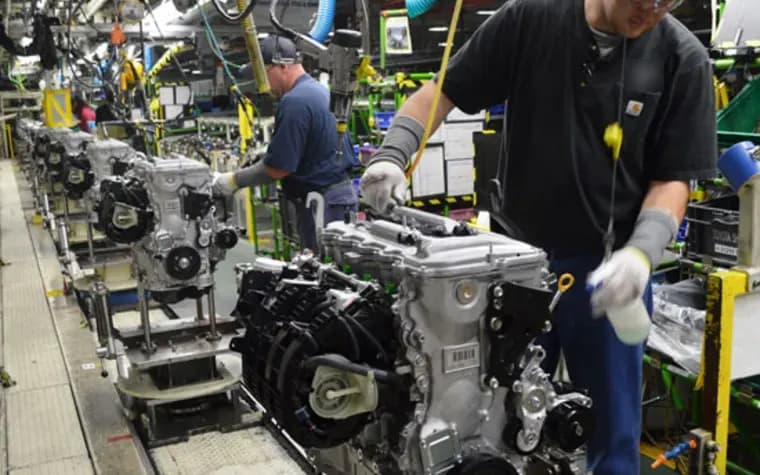 84%trace to four root causes
IMDS rejections are a process problem, not a data problem.
We analyzed 4,200 IMDS rejections across nine Tier-1 suppliers. Eighty-four percent come down to four root causes. Here's how to engineer them out.
3.4xfalse positives after darkWhy your computer-vision pilot fails on the second shift.
Lighting changes between shifts is the single most common reason vision pilots that pass UAT fail in production. Here's how we handle it.
+41%RUL accuracy, multi-modalVibration alone won't predict your next bearing failure.
Multi-modal signals (vibration, thermal, MCSA, oil debris) produce dramatically better RUL forecasts than any single channel. The math, with examples.
 11 momedian payback, metering first
PAT compliance: the case for sub-metering before subsidy.
Most designated consumers under PAT chase incentives. The faster ROI is upstream, in sub-metering and per-product attribution.
2 of 9frameworks accept top-downBRSR and CSRD: the data layer no one is building yet.
Indian and European disclosure frameworks are converging on bottom-up product carbon. Most ESG software is still aggregating top-down. The gap matters.
<80 mscamera to decision, on-premWhy we run inference at the edge.
Three reasons industrial AI belongs on the plant floor: latency, data residency, and the third one nobody talks about.
 −89%rejections, one fiscal year
How a Tier-1 cut declaration rejections by 89%.
A walkthrough of an actual deployment program: kickoff, the first hard week, the second-month plateau, and what cleared the declaration backlog.
1 in 12escapes a 2.5 AQL planThe problem with sampled QC, in three charts.
Sampling plans were designed for a world with much higher defect rates. Today, AQL math actively hides the things that actually escape.
 Quarterlyreporting cadence required
CBAM is here, and your steel customers want primary data.
What CBAM declarations actually need from upstream metals suppliers, and why annual averages won't satisfy the reporting period.
Get the next field note.
One note when we publish one, roughly monthly. What we learned in a plant that week: compliance, reliability, vision, and what survives past the pilot. No product mail.
Bring one problem. We'll show you the deployment.
A 30-minute working session with our engineering team. No slideware. Bring a real operational problem and leave with a concrete view of what a PredCo deployment looks like for your plant.