
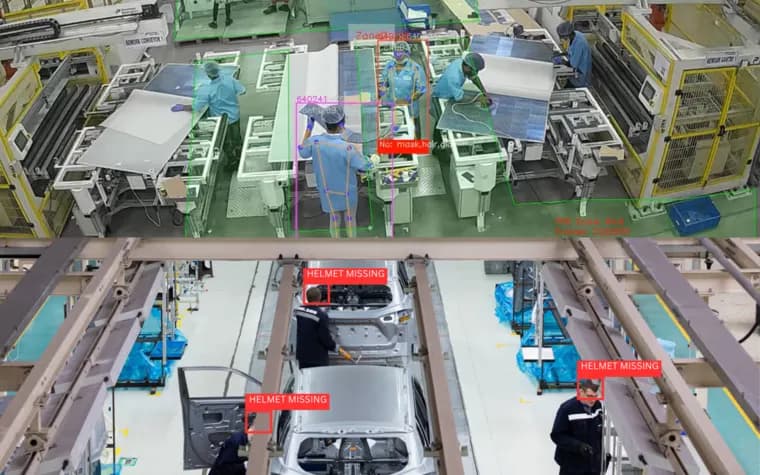
PPE detection software checks, from a camera feed, whether people in a zone are wearing what that zone requires. In a plant that usually means helmets, high-visibility vests, safety glasses, gloves, harnesses at height and hairnets on food or pharma lines. Done on the CCTV a plant already has, it turns PPE compliance from a sample taken on an inspection round into a record of every shift.
Why PPE slips where it does
- Night shift and weekends, when fewer supervisors are on the floor.
- Contractors and visitors, who are inducted once and supervised less.
- The far end of the shop, away from offices and walkways.
- Short tasks, where people decide a helmet is not worth it for two minutes.
What it can check reliably
Helmets and vests are the most reliable classes, because they are large and distinctive. Glasses and gloves need a closer camera at the workstation. Harness use needs a view of the person at height. Hairnets are reliable on food and pharma lines where cameras sit close to the line. The model should be trained on your own vest colours and helmet types, including your contractors'.
Rolling it out without alert fatigue
- Write PPE rules per zone and per shift, not per plant. A helmet at the press line, not in the canteen.
- Start with two or three zones where a miss has the worst outcome.
- Send alerts to the supervisor who owns that zone, not to a central inbox.
- Review a daily summary by zone and shift for the first fortnight, and tune before adding zones.
- Use confirmations and dismissals to retrain the model for your lighting and layout.
Privacy
PPE detection is about whether equipment is worn, not about who is wearing it. Faces can be blurred at the edge before anything is stored, footage can stay inside the plant, and reports can show zones and shifts rather than names.
Written from deployment experience across multiple sites. Patterns are described without identifying any customer — we are under confidentiality with the operators involved.
Talk to an engineer about this